Leave Your Message

Top Fabric Shower Curtain Manufacturers for Global Buyers

The global market for Fabric Shower Curtain products is expanding with home renovation, hospitality development, and online purchasing. Grand View Research and Fortune Business Insights place the broader home-textiles market above US$130 billion, although their figures differ by scope and methodology. That difference matters. Buyers should not treat every market forecast as equally precise.

This guide examines leading Fabric Shower Curtain manufacturers for global buyers. It considers material composition, waterproof coating, stitching quality, packaging, production capacity, and export experience. A curtain should hang evenly, dry quickly, and resist mildew around its lower hem. Small details matter. Reinforced eyelets, rust-resistant grommets, and consistent panel sizes often reveal a factory’s real capabilities.

Kate Fletcher, a recognized sustainable-fashion researcher, states, “There is no such thing as a sustainable product, only more or less sustainable choices.” Her observation applies directly to shower curtains. Polyester, cotton blends, recycled fibers, PVC-free coatings, and low-impact packaging each involve different trade-offs. Recycled content alone does not prove responsible manufacturing. Buyers still need test reports, factory audits, product samples, and clear care instructions. This is not a perfect comparison. Supplier information can be incomplete, and certifications may cover only selected facilities or product lines. Therefore, the manufacturers discussed here should be assessed against documented specifications, not attractive catalog images. The strongest suppliers combine dependable quality, transparent communication, scalable production, and practical customization for hotels, retailers, distributors, and e-commerce brands.
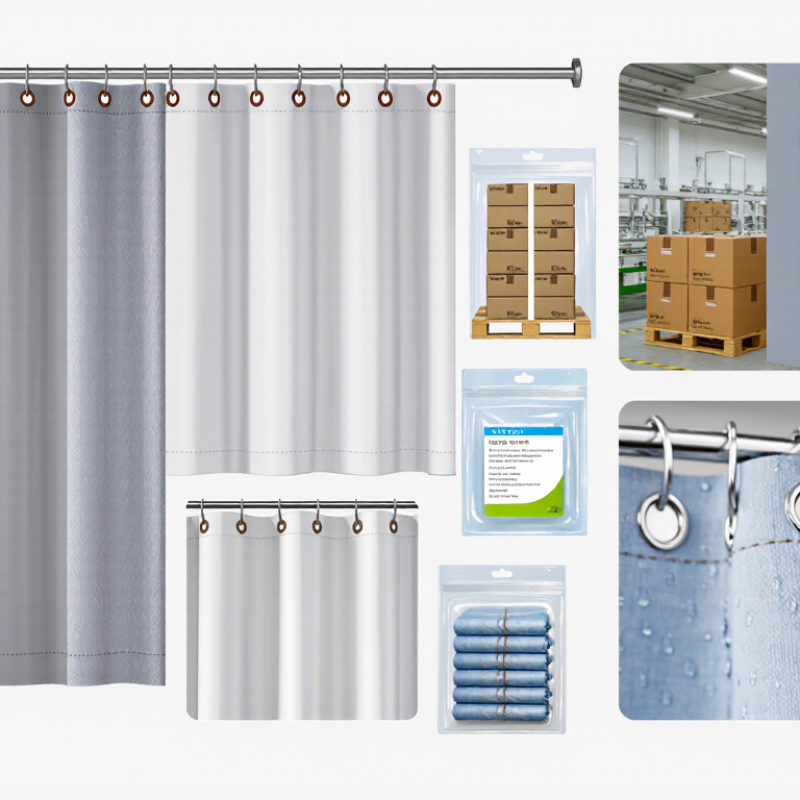
Top Fabric Shower Curtain Manufacturers for Global Buyers

What Defines a Reliable Fabric Shower Curtain Manufacturer

A reliable fabric shower curtain manufacturer proves consistency before discussing price. Request pre-production samples, seam photographs, and a full material specification. The fabric should show stable dimensions, clean hems, reinforced eyelets, and even water-repellent performance after washing. Ask for test results using recognized methods, such as AATCC water-repellency and laundering procedures.

Documentation matters. The ISO Survey 2023 recorded more than 1.26 million ISO 9001 certificates worldwide, but certification alone does not guarantee excellent curtains. Verify the certificate’s scope, issuing body, and production site. A dependable supplier should also provide batch records, colorfastness results, restricted-substance declarations, and corrective-action reports. It should explain what happens when a shipment fails inspection.

Sustainability claims require evidence. Textile Exchange’s Materials Market Report 2024 estimated global fiber production at 124 million tonnes in 2023, with growth projected toward 160 million tonnes by 2030. That pressure makes recycled content attractive, yet recycled claims can be vague. Require percentage calculations, transaction records, and independent verification. Check packaging, carton strength, and moisture protection too. Small details matter. A factory may pass an audit and still miss a sewing defect. Buyers should inspect random units, not only approved samples. Reliability is built through repeated evidence, transparent communication, and a willingness to admit process weaknesses.
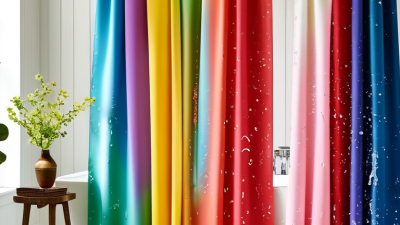
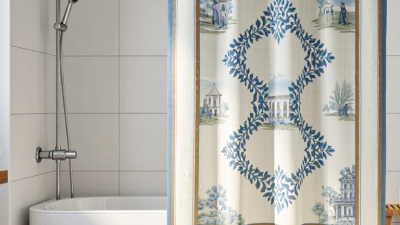
Key Materials and Production Standards for Global Buyers

Top Fabric Shower Curtain Manufacturers for Global Buyers

Fabric selection shapes a shower curtain’s performance, cost, and environmental profile. Polyester remains popular because it dries quickly, resists shrinking, and holds printed patterns well. Recycled polyester can reduce virgin material use, but buyers should request traceability documents instead of trusting a label alone. Cotton and linen blends offer a softer hand feel. They may absorb more moisture and require stronger mildew-control testing.

Construction details deserve equal attention. A dense weave can improve privacy and reduce water passage, while reinforced header tape helps prevent tearing around metal eyelets. Manufacturers should provide fabric weight, dimensional stability results, colorfastness data, and seam-strength measurements. Ask how water repellency is applied. A PVC-free polyurethane coating may be suitable, but coating durability should be tested after repeated washing. Small details matter.

Production standards vary by destination. Reliable suppliers normally support testing under relevant ISO, ASTM, or AATCC methods, depending on the buyer’s market. Tests may cover restricted substances, formaldehyde, azo dyes, flammability where applicable, and wash performance. Compliance paperwork is useful, but it does not replace an independent sample inspection. I have seen attractive samples fail after several wash cycles. That mistake is expensive. Buyers should compare pre-production samples with bulk goods, inspect stitching under bright light, and confirm packaging moisture protection. No factory is flawless. Clear corrective-action records often reveal more professionalism than polished sales claims.

Top Fabric Shower Curtain Manufacturers for Global Buyers

Key Materials and Production Standards for Global Buyers

Polyester is widely selected for fabric shower curtains because its low moisture regain supports faster drying and easier maintenance. Cotton provides a softer hand feel but absorbs significantly more moisture, while PEVA and PVC are non-fabric waterproof alternatives. Global buyers commonly review REACH chemical compliance, OEKO-TEX material testing, CPSIA requirements for the U.S. market, and ISO 9001 quality-management procedures when evaluating production partners.

Indicative moisture-regain values: cotton approximately 8.5%, polyester approximately 0.4%, and PVC approximately 0%. PEVA is treated as a non-absorbent polymer material for product-selection purposes. Lower values generally indicate faster drying.

How Manufacturers Support Custom Designs and Private Labels

Custom fabric shower curtain manufacturers help global buyers turn basic specifications into distinctive bathroom products. Experienced teams can adjust fabric weight, weave, color, dimensions, and water-resistant finishes. They usually begin with a digital proof, material swatches, and a physical sample. This process reveals practical issues, such as uneven hems or colors that change under warm lighting. Small details matter.

Private-label support often includes sewn labels, printed care tags, custom packaging, barcode placement, and carton markings. Reliable manufacturers should confirm artwork files, label positions, thread colors, and packing measurements before production. Quality teams may inspect stitching density, grommet strength, fabric shrinkage, and surface coating. Buyers should request inspection photos and test reports when available. Not every supplier handles these steps equally well. That requires careful comparison.

Tips: Share a complete specification sheet before requesting prices. Include curtain size, fabric composition, finish, label artwork, packaging style, and target quantity. Ask whether the sample uses the same materials as mass production. A sample can look excellent, yet bulk goods may differ if controls are weak. Keep written approvals for every revision. Leave room for correction; even experienced teams sometimes miss a color code or packaging detail. Temperature, humidity, and shipping time can also affect final presentation.

Top Fabric Shower Curtain Manufacturers for Global Buyers - How Manufacturers Support Custom Designs and Private Labels
Manufacturer Profile Common Fabric Options Custom Design Support Private Label Services Typical MOQ Range Sample & Production Lead Time Quality and Compliance Support Global Buyer Considerations
Large-scale home-textile factory Polyester Recycled polyester Cotton blends Digital or rotary printing, custom dimensions, weighted hems, reinforced buttonholes, rust-resistant grommets, and coordinated bathroom textile sets. Woven labels, printed care labels, custom packaging, barcode stickers, folding methods, and retail-ready carton markings. Usually 500–3,000 pieces per design Pre-production sample commonly takes 7–15 days; bulk production commonly takes 30–60 days after artwork and specifications are approved. Buyers may request material test reports, colorfastness testing, dimensional checks, social-compliance audits, and restricted-substance documentation. Suitable for established retailers and distributors requiring stable capacity, repeat production, and consolidated export shipments.
Mid-sized custom textile manufacturer Woven polyester Jacquard fabric Linen-look fabric Lower-volume pattern development, custom woven textures, logo placement, color matching against physical references, and multiple size formats. Custom hangtags, insert cards, packaging sleeves, sewn labels, and buyer-specific carton instructions. Usually 200–1,000 pieces per design Initial samples commonly take 10–20 days; production commonly takes 35–60 days depending on fabric availability and order complexity. Quality systems may include incoming-fabric inspection, in-line inspection, finished-product checks, needle detection, and pre-shipment inspection. A practical option for specialty retailers, hospitality suppliers, and e-commerce sellers testing several designs.
Eco-focused fabric manufacturer Recycled PET polyester Organic cotton Hemp blends Custom artwork, low-impact color programs, recycled-content specifications, minimalist finishes, and packaging designed to reduce plastic use. Private-label labels, recycled-paper packaging, sustainability statements, product inserts, and supply-chain documentation subject to verification. Usually 500–2,000 pieces per design Material approval and certification checks can extend sampling to 15–25 days; production commonly takes 40–70 days. Buyers may request recycled-content verification, organic-fiber certification, chemical compliance testing, and transaction certificates where applicable. Best for buyers with documented sustainability requirements; environmental claims should be supported by current certificates and traceable transaction records.
Hospitality and contract-textile supplier Heavyweight polyester Treated cotton Performance blends Custom lengths and widths, commercial-grade hems, extra reinforcement, repeatable color programs, and specifications for frequent laundering. Custom labels, property-specific packaging, room-set bundles, inventory codes, and delivery documentation for hotel or facility projects. Usually 300–2,000 pieces per specification Sampling commonly takes 10–20 days; production commonly takes 35–65 days, with timing influenced by fabric treatment and testing requirements. Buyers may request wash-cycle testing, seam-strength checks, colorfastness testing, dimensional stability reports, and inspection records. Appropriate for hotels, serviced apartments, healthcare facilities, and institutional buyers needing consistent replacement programs.
Small-batch and development-oriented workshop Polyester Cotton Recycled blends Prototype development, small artwork runs, custom size adjustments, sample revisions, contrast trims, and limited-edition collections. Basic sewn labels, custom stickers, simple polybag or paper packaging, and direct-to-consumer fulfillment preparation. Often 50–300 pieces per design Samples commonly take 7–18 days; production commonly takes 20–45 days, depending on fabric stock and sewing capacity. Quality control is often arranged per order; buyers should define inspection standards, tolerances, packaging requirements, and testing responsibilities in writing. Well suited to emerging brands and online sellers, but capacity and repeatability should be confirmed before launching a high-volume program.
Integrated fabric-and-finished-goods manufacturer Printed polyester Woven fabrics Coated textiles Fabric development, color formulation, printing, cutting, sewing, finishing, and coordinated accessories from one production workflow. Full private-label packaging, product inserts, carton design, barcode application, assortment planning, and shipment consolidation. Usually 1,000–5,000 pieces per design Development commonly takes 15–30 days; production commonly takes 45–75 days, especially for new fabrics or multi-item collections. Buyers can typically coordinate fabric testing, finished-product inspection, packaging checks, and pre-shipment verification through one supplier. Efficient for complete bathroom collections, multi-country assortments, and buyers seeking fewer supply-chain handoffs.
Buyer note: MOQ levels, lead times, certifications, testing, and private-label services vary by manufacturer, fabric, order size, destination market, and product specification. Confirm all commercial and compliance details with the selected supplier before placing an order.

Quality Control, Certifications, and Ethical Manufacturing Practices

Top Fabric Shower Curtain Manufacturers for Global Buyers

Quality control should begin with the fabric roll, not the finished shower curtain. Leading manufacturers test fabric weight, water resistance, colorfastness, seam strength, and grommet attachment. Each production batch should carry a traceable lot number. Small details matter.

The ISO Survey 2023 recorded more than 1.26 million ISO 9001 certificates worldwide. This figure shows the value of documented quality systems, but certification alone is not enough. Buyers should request inspection records, laboratory results, corrective-action reports, and recent factory-audit findings. Independent testing can confirm restricted-substance compliance and product durability. A certificate can expire. Factories change.

Certification choices should match the material and risk. OEKO-TEX Standard 100 supports chemical safety testing for textile components. The Global Recycled Standard can verify recycled content and chain-of-custody controls. SA8000 offers a framework for labor rights, while ISO 14001 addresses environmental management. These systems are useful, but their scope deserves careful review. Are subcontractors included? Are wastewater records available?

Textile Exchange reported that global fiber production reached 124 million tonnes in 2023 and may approach 160 million tonnes by 2030. That growth increases pressure on manufacturers to reduce waste and disclose material sources. Responsible factories should measure cutting waste, energy use, water treatment, and worker safety. Buyers should also check wage practices through interviews, not paperwork alone. Ethical claims need evidence. Even strong suppliers may have gaps; honest reporting is more reliable than polished promises.

How to Evaluate Pricing, Logistics, and Export Capabilities

For global buyers, fabric shower curtain pricing must be compared line by line. Request the fabric weight, fiber blend, coating, size, stitching method, packaging, and minimum order quantity. A low unit price can hide expensive cartons, weak hems, or high replacement rates. Textile Exchange’s Materials Market Report 2024 states that polyester represented about 59% of global fiber production in 2023, while cotton accounted for roughly 22%. This difference affects material cost, drying performance, and care instructions.

Logistics can change the final price more than the factory quotation. UNCTAD’s Review of Maritime Transport reports that over 80% of world merchandise trade moves by sea. Ask manufacturers for realistic production dates, port options, carton dimensions, and container loading plans. The World Bank’s Logistics Performance Index 2023 indicates that international shipments can take about 44 days from export-port entry to destination-port exit. Build buffer time. Delays happen.

Export capability needs evidence, not confident emails. Check commercial invoices, packing lists, certificates of origin, test reports, and previous shipment records. Confirm whether prices are FOB, CIF, or another Incoterm, because responsibility changes sharply. A useful supplier should explain fabric testing, color consistency, moisture protection, and claims handling. I would also inspect a pre-production sample. One weakness remains: buyers often judge suppliers by price before testing durability. That habit needs correction. A polished catalog proves very little.