China Top 10 Cotton Tablecloth Suppliers?
China has become a major sourcing destination for Cotton Tablecloths, serving restaurants, hotels, retailers, and home textile brands worldwide. Its suppliers offer varied fabrics, including plain cotton, printed cotton, cotton-linen blends, and recycled options. Production ranges from small workshops to large export factories with automated cutting and stitching lines.
This guide introduces ten notable Chinese suppliers for buyers comparing quality, pricing, customization, and delivery capability. The selection should not be treated as a permanent ranking. Supplier performance can change.
Each company is considered through practical purchasing factors. These include fabric composition, GSM, shrinkage control, colorfastness, sewing accuracy, packaging, minimum order quantities, and sampling services. Certifications and audit records also matter, especially for buyers serving hospitality or retail markets. A supplier may show attractive catalog photos but provide weaker samples. That gap deserves attention.
Real sourcing experience shows that details often affect the final result. A 140-centimeter tablecloth may arrive two centimeters narrower after washing. A bright red pattern may fade under repeated commercial laundering. Small issues become expensive at scale. Buyers should request current samples, test washing performance, confirm production capacity, and review recent export references before signing an order. Communication quality is important, too. Clear replies about fabric weight, lead time, labeling, and defect handling usually indicate stronger project management.
The following overview aims to support informed supplier comparison. It does not replace independent verification. Prices, certifications, and production claims should be checked directly with each company.
What Defines a Reliable Cotton Tablecloth Supplier in China?
A reliable cotton tablecloth supplier in China should offer more than attractive product photos. They need clear control over fiber content, weaving, dyeing, and finishing. Ask whether the fabric is 100% cotton, blended, or treated with coatings. The answer should match the product label and test report.
Request a physical sample before placing a large order. Check its weight, stitching, shrinkage, color consistency, and surface feel. Wash it according to normal household instructions. A strong supplier should explain expected shrinkage and provide a practical quality standard. They should also maintain inspection records for fabric rolls, cutting, sewing, and packing. Small details matter. Uneven hems often reveal weak process control.
Communication is another important measure. Reliable teams confirm dimensions, packaging, lead times, and acceptable defects in writing. They should respond clearly when specifications change. Factory experience helps, but it does not remove risk. During one sample review, a slightly different white tone seemed harmless until several pieces were placed together. That mistake showed why color approval needs physical references, not casual messages. Suppliers with stable production capacity, transparent documentation, and responsive after-sales handling are usually safer choices. Still, buyers should review every batch. Trust needs evidence.
Key Products and Materials Offered by Chinese Suppliers
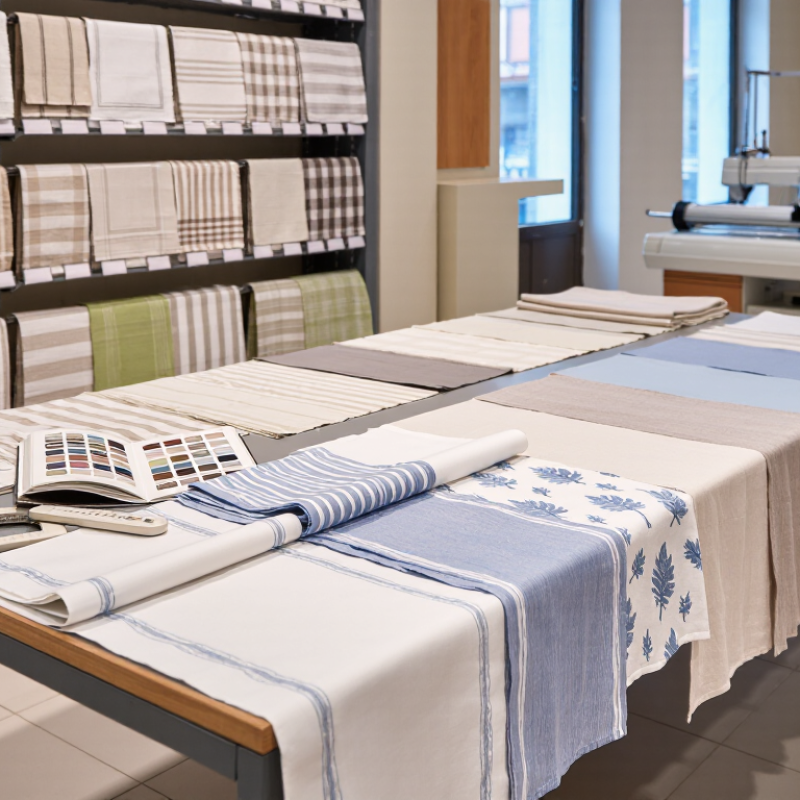
Chinese cotton tablecloth suppliers offer more than standard white covers. Their product ranges often include rectangular cloths, round table covers, runners, napkins, and matching placemats. Many factories produce 100% cotton fabrics with plain, yarn-dyed, printed, or jacquard surfaces. Cotton-linen blends are also popular because they feel cooler and wrinkle less. However, blended fabric may not provide the same softness as pure cotton.
Common material weights range from lightweight 120 GSM cloths to heavy 300 GSM canvas-style fabrics. Lightweight cotton suits cafés and casual dining. Heavier options work better for banquet tables and frequent washing.
Suppliers may also provide twill, muslin, dobby, and recycled cotton materials. Some offer water-repellent finishes, embroidery, digital printing, or woven patterns. These treatments can change the fabric’s hand feel.
In practical sourcing, request fabric samples before discussing large quantities. Check shrinkage after washing, colorfastness, seam quality, and edge finishing. A supplier should explain the fabric composition clearly. Ask for test reports when specific standards matter. Small flaws can appear in hand-printed designs. That is not always a serious defect, but expectations must be written down. I would also compare the same GSM from several suppliers, since fabric density can feel different. Clear size charts and packaging details reduce costly misunderstandings.
China’s Top 10 Cotton Tablecloth Suppliers
China’s Top 10 Cotton Tablecloth Suppliers are best compared through material quality, production control, and export experience. Textile Exchange’s Materials Market Report 2024 estimated global fiber production at 124 million tonnes in 2023. Cotton represented about 22 percent, showing its continuing importance in household textiles.
A reliable supplier should provide traceable cotton content, fabric weight, shrinkage results, and colorfastness records. For dining tablecloths, 180–240 GSM cotton usually offers a practical balance between drape and durability. Heavier fabric feels premium but may increase shipping costs. Ask for stitched corner samples, not only fabric swatches. Small details matter.
The USDA Cotton: World Markets and Trade report identifies China as one of the world’s largest cotton textile manufacturing centers. This supports its strong supplier base, but scale does not guarantee consistency. A useful review should compare the top 10 suppliers by sample accuracy, minimum order quantity, inspection procedures, and lead time. One supplier may excel at hotel orders, while another handles smaller retail batches better. That difference is often missed.
Independent testing remains important. Check dimensional change after washing, especially for printed cotton. Some suppliers report laboratory results clearly; others provide incomplete files. That is a warning sign. Rankings can also become outdated when equipment, workers, or export markets change. Buyers should request current samples, recent test reports, and production photos before approving a bulk order.
China Top 10 Cotton Tablecloth Suppliers
| Rank |
Supplier Profile |
Primary Manufacturing Area |
Main Cotton Tablecloth Types |
Typical Fabric Weight |
Typical MOQ |
Sample Lead Time |
Common Compliance Options |
| 1 |
Supplier Profile 01 |
Nantong, Jiangsu |
Woven cotton, yarn-dyed checks, hotel linens |
180–240 gsm |
500 pieces |
7–12 days |
OEKO-TEX® Standard 100, REACH testing |
| 2 |
Supplier Profile 02 |
Shaoxing, Zhejiang |
Printed cotton, floral patterns, custom designs |
160–220 gsm |
300 pieces |
10–15 days |
Azo-free dyes, CPSIA support, REACH testing |
| 3 |
Supplier Profile 03 |
Ningbo, Zhejiang |
Water-repellent cotton, outdoor and dining linens |
200–280 gsm |
500 pieces |
12–18 days |
REACH testing, colorfastness testing |
| 4 |
Supplier Profile 04 |
Jiaxing, Zhejiang |
Washed cotton, farmhouse and rustic styles |
150–210 gsm |
300 pieces |
8–14 days |
OEKO-TEX® Standard 100, social-audit support |
| 5 |
Supplier Profile 05 |
Qingdao, Shandong |
Plain cotton, restaurant and catering table linens |
190–260 gsm |
1,000 pieces |
10–16 days |
Colorfastness, shrinkage, and seam-strength testing |
| 6 |
Supplier Profile 06 |
Guangzhou, Guangdong |
Digital-print cotton, event and hospitality linens |
140–200 gsm |
200 pieces |
7–14 days |
Azo-free dyes, REACH testing, CPSIA support |
| 7 |
Supplier Profile 07 |
Wenzhou, Zhejiang |
Embroidered cotton, premium home dining textiles |
180–250 gsm |
300 pieces |
12–20 days |
OEKO-TEX® Standard 100, needle and seam inspection |
| 8 |
Supplier Profile 08 |
Foshan, Guangdong |
Cotton-linen blends, modern dining collections |
170–230 gsm |
500 pieces |
10–18 days |
REACH testing, fiber-composition verification |
| 9 |
Supplier Profile 09 |
Hangzhou, Zhejiang |
Organic cotton, sustainable household textiles |
160–220 gsm |
500 pieces |
14–21 days |
GOTS option, OEKO-TEX® Standard 100, recycled packaging |
| 10 |
Supplier Profile 10 |
Zhongshan, Guangdong |
Jacquard cotton, banquet and luxury table linens |
220–320 gsm |
300 pieces |
15–25 days |
REACH testing, colorfastness, dimensional-stability testing |
Note: Supplier profiles are anonymized. Minimum order quantities, lead times, fabric weights, and compliance options are indicative industry ranges and should be confirmed directly during the quotation and sampling process.
How to Compare Quality, Pricing, and Customization Services
China Top 10 Cotton Tablecloth Suppliers?
Comparing ten Chinese suppliers requires more than checking catalog photos. Textile Exchange’s 2024 Materials Market Report estimates that cotton represented 22% of global fiber production in 2023. This scale makes fiber traceability important. Request the cotton content, yarn count, fabric weight, shrinkage rate, and colorfastness test. A 200–300 thread-count tablecloth may feel smooth, but finishing can hide weak construction. Inspect a washed sample, not only a showroom sample.
Pricing needs a full cost sheet. Compare the same size, hem style, fabric weight, packaging, and order quantity. A low quotation may exclude embroidery, woven labels, inspection, or export packaging. Ask for FOB and delivered-cost options. The International Trade Centre notes that textile trade competitiveness depends heavily on product specification and logistics, not factory price alone. This is often overlooked.
Tips: Create a scoring sheet for quality, price, lead time, customization, and communication. Give each category a fixed weight. For customization, confirm digital artwork limits, color matching, corner shapes, stain-resistant finishes, and sample fees. Also request a pre-shipment inspection. It adds cost, but one failed container costs more. My own comparison framework is not perfect; supplier replies can change after sampling, and quoted prices may shift with cotton markets. Keep written specifications and approval samples.